Match the panel to the roof
We look at pitch, canopy and the existing deck, then recommend 5V crimp or standing seam with the gauge and Florida Product Approval written on the scope.
Metal earns its place in Gainesville on the roofs the canopy punishes most: low-pitch NW and SW block ranches under oaks, and steep historic roofs around Duckpond. Standing seam sheds the litter that packs shingle valleys. For many Haile Plantation and Tioga homes, though, shingle still fits better.
Gainesville · 352-664-8585 · 407 five-star Google reviews
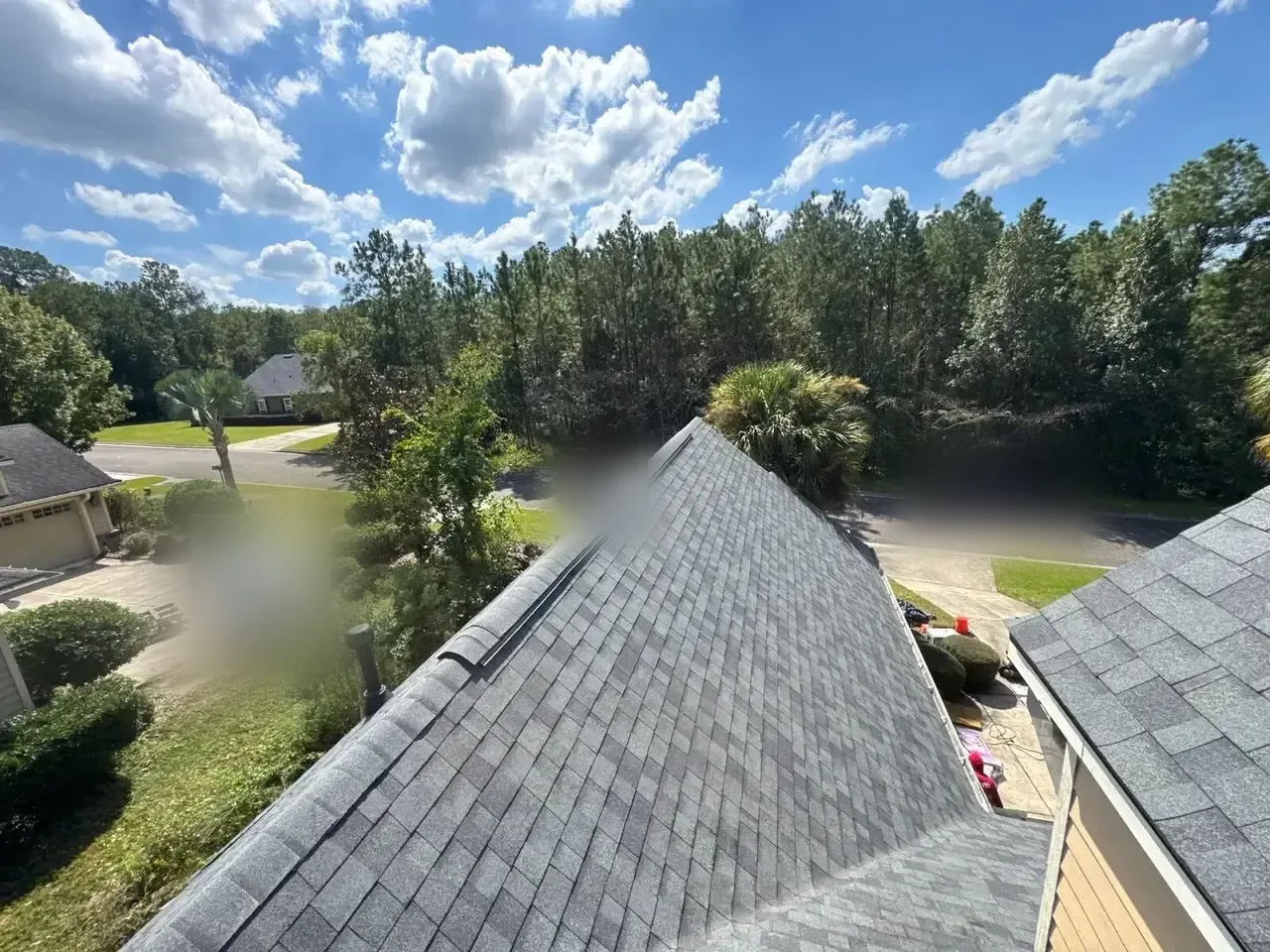
Brehm project photo, Gainesville, Florida, September 2026
In Gainesville the case for metal starts with the trees. On a 1960s block ranch in Suburban Heights or off SW 20th Avenue, a low pitch under live oaks means leaf litter sits in the valleys and along the eaves, holds water, and rots the deck under shingles that are otherwise fine. A standing seam panel runs from ridge to eave with no laps for litter to catch on, so the roof sheds what the canopy drops after every storm. The other natural fit is the steep 1920s to 1940s frame houses in Duckpond and Pleasant Street, where metal suits the architecture. Where metal fits less well is the association villages of Haile Plantation and Tioga, for reasons that are mostly about approval.
Two panel types cover most Gainesville metal roofs. 5V crimp is an exposed fastener panel, commonly 26 gauge, screwed through the face with gasketed screws; it suits porches, workshops and simple gables, and its washers need checking as they age in the sun. Standing seam, commonly 24 gauge, where the lower number means thicker steel, hides its fasteners under a raised seam and rides on clips that let the panel move with heat. Under the canopy that matters twice: no rows of screw heads for wet oak litter to sit against, and thicker steel that resists denting when a limb comes down. We write the profile, the gauge and the Florida Product Approval number on the scope.
The myths come up on every Gainesville metal call. Noise: a metal roof over solid decking, peel-and-stick underlayment and an insulated attic sounds much like shingle in a summer downpour; the drumming people remember is metal over open purlins on a barn or carport. Expansion: the ticking some roofs make in the morning sun comes from exposed fasteners fighting thermal movement, which standing seam clips are designed to allow. Heat: a light or reflective finish turns back more afternoon sun than dark shingle, which matters on the unshaded south slopes in Northwood and along the NW 39th Avenue corridor, and matters less under full canopy. Most standing seam installs take two to four days.
Approvals decide more Gainesville metal projects than the roof does. Haile Plantation's village associations and the Town of Tioga review profile and color, and a switch from shingle to metal is the kind of change they look at closely, so we prepare the submittal with panel drawings and color chips before you commit. In the Duckpond and Pleasant Street historic districts, metal can suit the house, but the profile and finish may need historic review. City addresses permit through the Building Division; Haile, Tioga and most of the NW 39th Avenue corridor permit through Alachua County. After the final we hand you the photos and permit record a licensed wind mitigation inspector needs so your carrier can credit the new roof.
The honest version: metal is not the default answer in Gainesville. On a 2000s Haile Plantation home with an association that prefers shingle and an owner who may sell in a few years, an Owens Corning Duration architectural shingle usually serves better. Insurance discounts come through the wind mitigation form, which credits the roof covering, deck attachment and secondary water barrier under any compliant roof, not the metal alone. Where metal does win is the low-pitch ranch buried in oak litter, the steep historic roof that suits it, and the owner who plans to stay. We tell you which group your house is in before you spend time on color chips.
Homes we work on in Gainesville: 1920s to 1940s frame homes with steep pitches in the Duckpond and Pleasant Street historic districts, 1950s to 1970s concrete block ranches across the NW and SW quadrants, and 1980s to 2010s subdivisions with HOAs such as Haile Plantation, Hunters Crossing and the Town of Tioga.
We look at pitch, canopy and the existing deck, then recommend 5V crimp or standing seam with the gauge and Florida Product Approval written on the scope.
For Haile Plantation, Tioga, or the Duckpond and Pleasant Street districts, we prepare profile drawings and color chips with you and order nothing until approval is in hand.
We strip to the deck, replace soft sheets under the oaks, lay high-temperature peel-and-stick underlayment, and fasten standing seam on clips that allow thermal movement.
The City of Gainesville or Alachua County signs off the final, and we hand you the CompanyCam photo record of every layer for your wind mitigation inspection.
Metal takes longer than a shingle reroof, and the crew leader gives you the day count before work starts. Every project runs with a bilingual crew leader, site supervisor and CompanyCam documentation. See how a Brehm project runs
Most Brehm metal roofing projects in Gainesville run from $24,000 to $75,000 for a standing seam or 5V metal roof, or roughly $216 to $852 a month on a 15-year plan. Roof size and pitch set most of the spread; decking repairs, skylights and the number of penetrations move a home within its band. Your written estimate after a free inspection is the price, and it does not change after you sign.
$24,000 to $42,500
1,400 to 1,900 sq ft. About $216 to $483 a month on a 15-year plan, illustrative.
$32,000 to $57,000
2,000 to 2,800 sq ft. About $287 to $648 a month on a 15-year plan, illustrative.
$42,500 to $75,000
3,000 sq ft and up. About $382 to $852 a month on a 15-year plan, illustrative.
Pitch, decking, details
Steeper pitches, rotted decking replaced by the sheet, skylights, chimneys and extra penetrations push toward the top of a band. A simple hip or gable on sound decking sits near the bottom.
Owner-approved planning ranges for typical Gainesville homes, current as of October 2026. Monthly figures are illustrative, 15-year term across the planning rate bands on the financing page; the lender sets your actual rate in writing. Your written estimate after a free inspection is the price. Financing options
Original Brehm project photos from CompanyCam. No stock imagery.
Architectural shingles, elevated roof view in Gainesville, Florida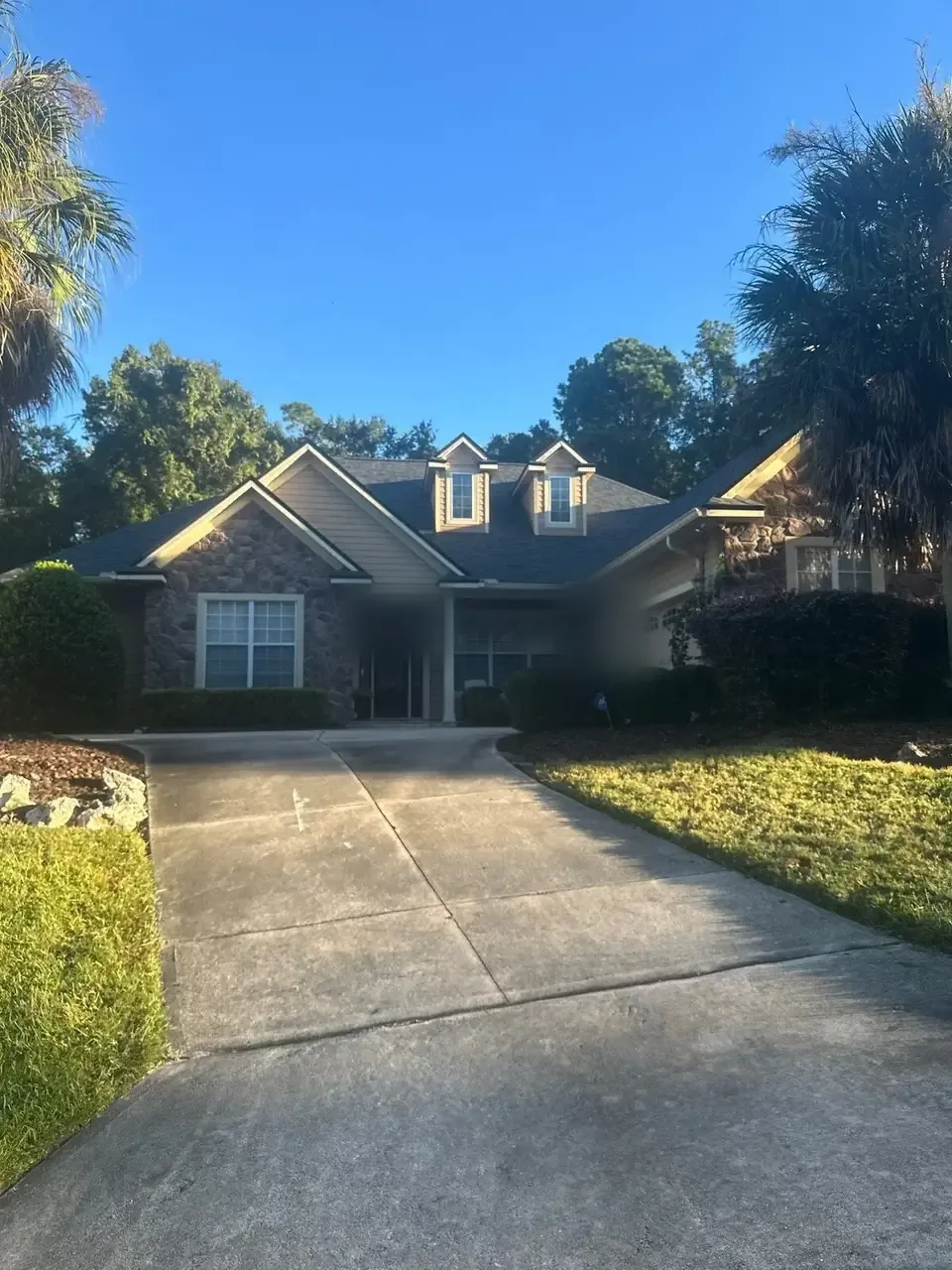 Shingle roof, front exterior view in Gainesville, Florida
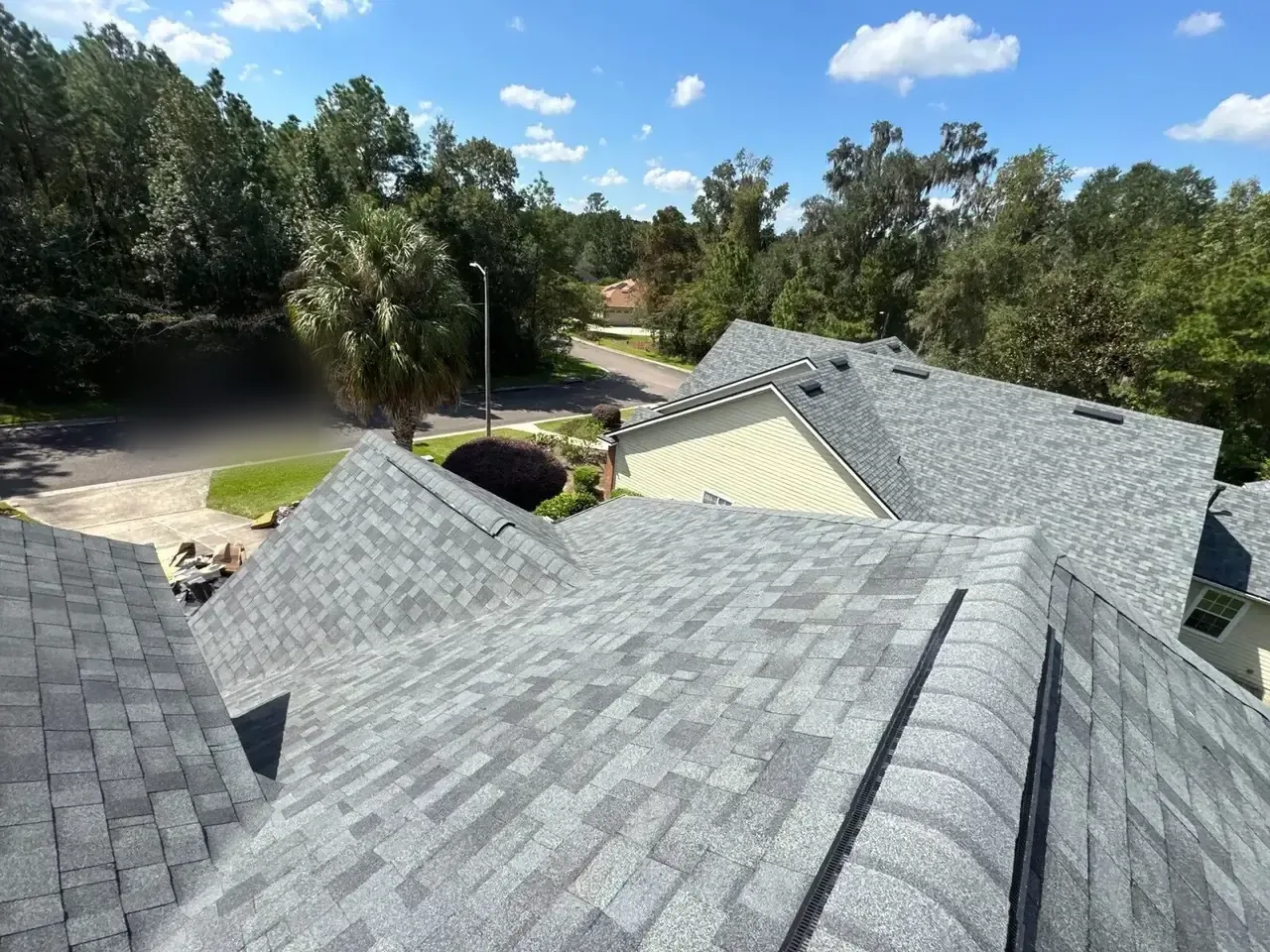 Shingle roof, multiple slopes and ridge view in Gainesville, Florida
Photos taken in Gainesville, Florida, photographed October 2026 and September 2026. Dates are CompanyCam capture dates, not completion dates.
“Just had my 5v metal roof replaced by Brehm. I highly recommend! I love my new roof. Zach was a pleasure to work with. Process was stress-free, Zach kept me updated and informed. Crew was amazing, everything was cleaned up each day.”
Bonnie · Metal roofing · 2024
Answers specific to Gainesville roofs, permits and approvals. Your property makes the conversation exact.
Talk with BrehmMost metal roofing projects Brehm does in Gainesville run from $24,000 to $75,000, which works out to about $216 to $852 a month on a 15-year plan. Smaller single-story homes sit at the low end; large two-story and lakefront homes sit at the top. The inspection is free, and the written estimate you receive is the price.
Not when it is installed over solid decking. Panels over plywood, peel-and-stick underlayment and an insulated attic sound much like shingle in a summer downpour. The drumming people remember comes from barns, carports and porch roofs with metal over open purlins and no deck. Living space under a solid deck and attic insulation is a different roof, and it sounds like one.
For most houses, standing seam: its fasteners are hidden under the seam, it moves on clips with heat, and it sheds oak litter cleanly. 5V crimp is an exposed fastener panel that works well on simple gables, workshops and porch roofs, but its screw washers need checking as they age. We recommend by pitch and canopy and write the gauge on the scope.
It depends on the village standards, and it is the first thing we check. Both review profile and color, and a shingle-to-metal change gets a close look. We prepare the submittal with panel drawings and color chips and order nothing until approval is in hand. If approval looks unlikely, we tell you before you spend time on it and talk about architectural shingle instead.
Code can allow metal over a single layer of shingle in some cases, but on a low-pitch ranch under Gainesville oaks we almost always tear off. The plywood under those valleys has usually been wet for years, and tear-off is the only way to find it, re-nail to current code, and give the wind mitigation inspector a deck attachment they can verify. Steel over soft decking hides the problem.
A large limb can dent any panel, and a dent in standing seam is cosmetic unless it opens a seam. Metal is less likely than shingle and plywood to let a limb through to the attic, which is the common Gainesville storm call. We still recommend trimming limbs that hang over the roof, because a badly dented panel is replaced whole, not patched.
Use this roof repair checklist to prepare. Add the questions you want answered and download your notes before talking with Brehm.
Get a free roof inspectionShare the property address, what you have observed, and any known roof history. The findings help shape the next step.
Download a blank checklist with six questions for this service. Interactive notes require JavaScript; nothing entered on this page is saved without it.
These notes are not sent to Brehm. Download a copy to bring to your conversation.
Bring your questions. We start with your property, the right permit office, and the next step.